Skin issues affect millions worldwide, yet many people confuse two common conditions: eczema and rosacea.
Last summer, my cousin noticed red patches on her cheeks and itchy rashes on her arms.
She wondered: is it eczema or rosacea? A visit to the dermatologist revealed the truth the differences are subtle but important.
Understanding the difference between eczema and rosacea helps in choosing the right treatment, avoiding complications, and maintaining healthy skin.
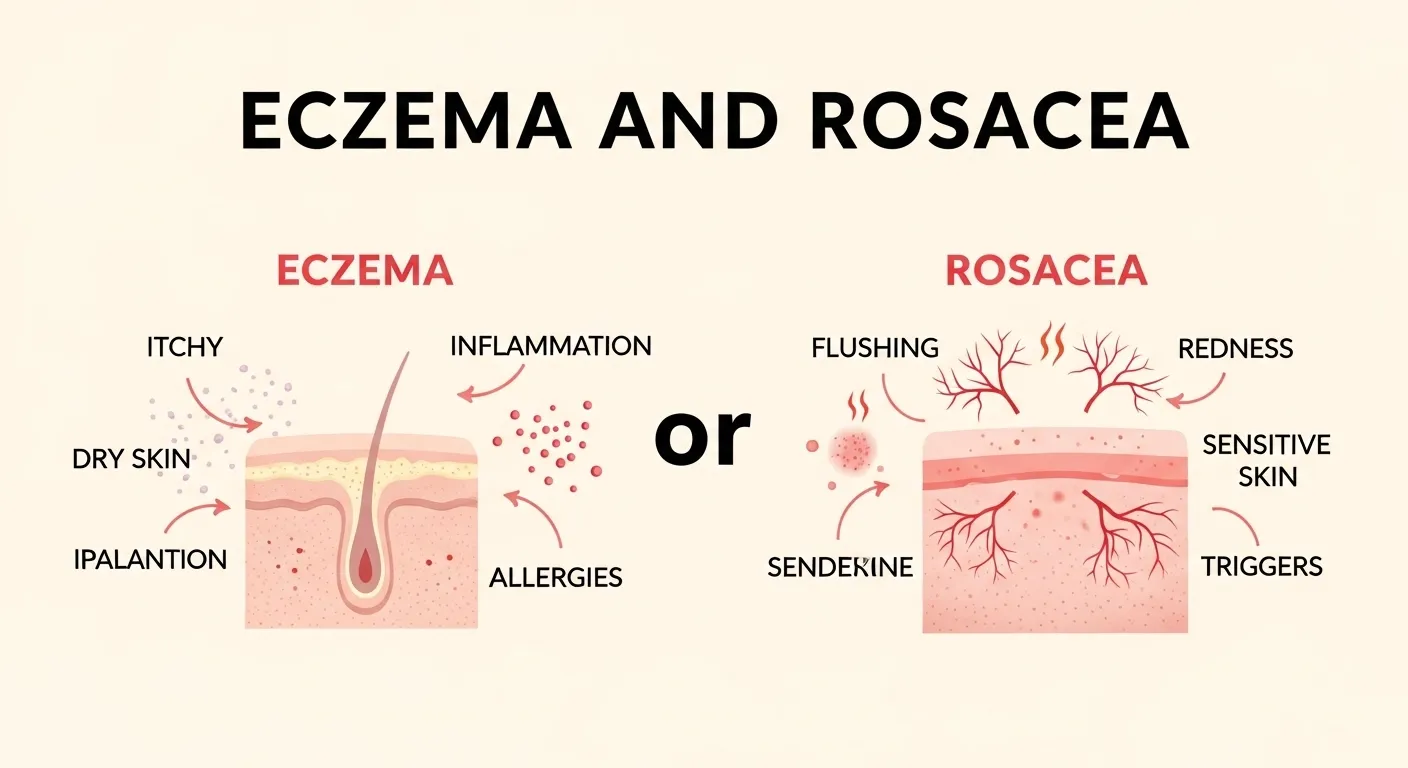
While eczema is often linked to dryness and allergic reactions, rosacea involves facial redness and inflammation.
Learning about their distinctions is crucial for medical students, skincare professionals, and anyone interested in skin health.
In this article, we will explore their symptoms, causes, treatment, and behavior in detail, so you can confidently distinguish eczema from rosacea in real-life situations.
Pronunciation:
- Eczema – US /ˈɛk·zə·mə/, UK /ˈɛk·sɪ·mə/
- Rosacea – US /roʊˈzeɪ·ʃə/, UK /rəʊˈzeɪ·ʃə/
Before we dive deeper, think of eczema as a skin reaction like an alarm system, while rosacea is like a constant flare of heat.
Let’s explore the difference between eczema and rosacea in detail.
Key Difference Between Eczema and Rosacea
- Eczema is primarily an inflammatory condition causing itchy, dry, and scaly skin.
- Rosacea is a chronic skin disorder that leads to persistent facial redness, visible blood vessels, and sometimes acne-like bumps.
Why Their Difference Is Necessary to Know
Understanding the difference between eczema and rosacea is vital for:
- Medical professionals – to prescribe the correct treatment and avoid worsening the condition.
- Skincare enthusiasts – to choose suitable products without triggering flare-ups.
- Society – reducing misconceptions about skin appearance, preventing stigma, and promoting skin health awareness.
Difference Between Eczema and Rosacea
Here are 10 detailed points of difference, each with examples for clarity:
- Cause
- Eczema: Often caused by allergies, genetics, or environmental triggers.
- Rosacea: Triggered by blood vessel abnormalities, sun exposure, or stress.
Example 1: Eczema can flare after using harsh detergents.
Example 2: Rosacea may worsen after spicy food or alcohol.
- Affected Areas
- Eczema: Typically affects arms, legs, and sometimes face.
- Rosacea: Primarily affects the central face (cheeks, nose, forehead).
Example 1: Eczema patches on elbows.
Example 2: Rosacea redness across both cheeks.
- Symptoms
- Eczema: Itchiness, dry skin, blisters, and flaking.
- Rosacea: Persistent redness, visible veins, and acne-like bumps.
Example 1: Scratching eczema causes rough, scaly patches.
Example 2: Rosacea can make the skin feel hot but not itchy.
- Age of Onset
- Eczema: Common in infants and children, sometimes adults.
- Rosacea: Usually appears in adults aged 30–50.
Example 1: Baby with cradle cap eczema.
Example 2: Adults develop rosacea around mid-40s.
- Triggers
- Eczema: Soap, detergents, allergens, weather changes.
- Rosacea: Sun, spicy food, alcohol, heat, emotional stress.
Example 1: Eczema worsens in winter due to dry air.
Example 2: Rosacea flares during hot summer days.
- Appearance
- Eczema: Red, scaly patches, sometimes oozing.
- Rosacea: Redness with small visible blood vessels.
Example 1: Dry, cracked eczema skin.
Example 2: Rosacea showing facial redness with bumps.
- Chronic Nature
- Eczema: Can flare intermittently, often seasonal.
- Rosacea: Chronic and persistent with periodic flare-ups.
Example 1: Eczema improves with moisturizer and treatment.
Example 2: Rosacea may persist for years despite therapy.
- Treatment Approach
- Eczema: Moisturizers, antihistamines, corticosteroids.
- Rosacea: Topical antibiotics, laser therapy, lifestyle adjustments.
Example 1: Hydrocortisone cream helps eczema patches.
Example 2: Laser therapy reduces rosacea redness.
- Complications
- Eczema: Risk of infection from scratching.
- Rosacea: Skin thickening (especially nose), eye irritation.
Example 1: Eczema scratch leading to bacterial infection.
Example 2: Rosacea causing rhinophyma in severe cases.
- Psychological Impact
- Eczema: Frustration due to itching and discomfort.
- Rosacea: Emotional distress due to facial appearance.
Example 1: Eczema causing sleep disturbance in children.
Example 2: Rosacea affecting adult confidence in social situations.
Nature and Behavior of Both
- Eczema: Reactive, often flare-ups due to external triggers. It behaves like a defense response of the skin.
- Rosacea: Chronic, persistent, and influenced by internal and environmental factors. It behaves like an overactive vascular system.
Why People Are Confused
Both conditions cause redness and skin irritation, and without professional diagnosis, it is easy to misinterpret eczema as rosacea or vice versa.
Eczema vs Rosacea: Table of Differences and Similarities
| Feature | Eczema | Rosacea | Similarity |
| Primary Cause | Allergic or environmental | Blood vessel abnormalities | Both involve skin inflammation |
| Affected Area | Arms, legs, sometimes face | Central face (cheeks, nose) | Both visible on skin |
| Symptoms | Itchiness, dryness, flaking | Redness, bumps, visible veins | Both cause discomfort |
| Age | Children and adults | Adults (30–50) | Can affect adults |
| Triggers | Allergens, soap, weather | Sun, spicy food, stress | Environmental factors can trigger |
| Appearance | Red, scaly, sometimes oozing | Red, flushed, acne-like bumps | Skin shows visible change |
| Treatment | Moisturizers, steroids | Antibiotics, lifestyle changes | Both need medical attention |
| Chronic/Intermittent | Flare-ups | Persistent and chronic | Both can reoccur |
| Complications | Infection risk | Skin thickening, eye issues | Both may affect health if untreated |
| Psychological Impact | Frustration, sleep issues | Emotional distress | Affect quality of life |
Which Is Better in What Situation?
- Eczema: Better managed with moisturizers and avoiding triggers. Ideal when itching and dryness are primary concerns. Daily care can prevent flare-ups effectively.
- Rosacea: Requires lifestyle adjustments, topical or laser treatments. Best addressed when persistent facial redness or vascular issues are the main problem.
Use in Metaphors and Similes
- Eczema: “Her patience was like eczema, flaring up with every small irritation.”
- Rosacea: “He blushed like rosacea whenever he was embarrassed.”
Connotation:
- Eczema – Neutral to negative (irritation, discomfort) → “Eczema of the mind”
- Rosacea – Neutral → “Rosacea-like intensity in her cheeks”
Idioms/Proverbs:
- “Flare up” – used for both → “His temper flared up like eczema.”
- “Red as a rose” – similar to rosacea → “Her cheeks were red as a rose in excitement.”
Works in Literature
- Eczema Tales (Non-fiction, Sarah James, 2016) – Personal stories on skin conditions.
- Rosacea: A Chronic Face (Medical, Dr. Linda Moore, 2019) – Dermatology guide.
Movies on Keywords
- The Red Face (2018, US) – Drama exploring rosacea and personal identity.
- Itchy Skin (2020, UK) – Documentary about eczema sufferers.
FAQs
- Can eczema and rosacea occur together?
Rarely, but it is possible. Proper diagnosis is needed. - Which is more painful?
Eczema causes itching and discomfort; rosacea causes burning but not intense pain. - Are they hereditary?
Eczema has strong genetic links; rosacea less so but may run in families. - Do both affect appearance?
Yes, eczema can cause visible patches; rosacea causes facial redness. - Can diet influence them?
Eczema – allergen triggers; rosacea – spicy foods and alcohol may worsen symptoms.
How Both Are Useful for Surroundings
- Eczema awareness: Promotes safe products, reduces skin irritation risks in children and workplaces.
- Rosacea awareness: Encourages sun protection, stress management, and proper skincare routines.
Final Words
Understanding the difference between eczema and rosacea empowers patients, healthcare providers, and skincare enthusiasts to respond appropriately. While symptoms may overlap, correct diagnosis ensures safety, comfort, and improved quality of life.
Conclusion
In conclusion, eczema and rosacea are common skin conditions with overlapping appearances but distinct causes, symptoms, and treatments.
Eczema is primarily inflammatory and itch-driven, whereas rosacea is chronic, redness-driven, and vascular in nature.
Learning their differences improves treatment, prevents complications, and reduces social stigma.
From metaphors to literature, these conditions also influence how society perceives and discusses skin health.
Proper knowledge equips individuals to handle flare-ups, choose suitable products, and promote awareness in their communities.
Understanding the difference between eczema and rosacea is not just medical knowledge; it’s essential for practical, everyday skin care.
Meta Description (26 words):
Discover the difference between eczema and rosacea, their causes, symptoms, treatments, and societal importance to help identify and manage these skin conditions effectively.