Last weekend, I stood outside a cinema with two ticket options flashing on the screen IMAX and 3D. A family next to me was debating the same thing.
The kids wanted 3D because of the glasses, while the father insisted IMAX was bigger and better.
That moment made me realize how common this confusion is. The difference between IMAX and 3D is not always clear, even for regular moviegoers.
The difference between IMAX and 3D lies in how each technology enhances your viewing experience.
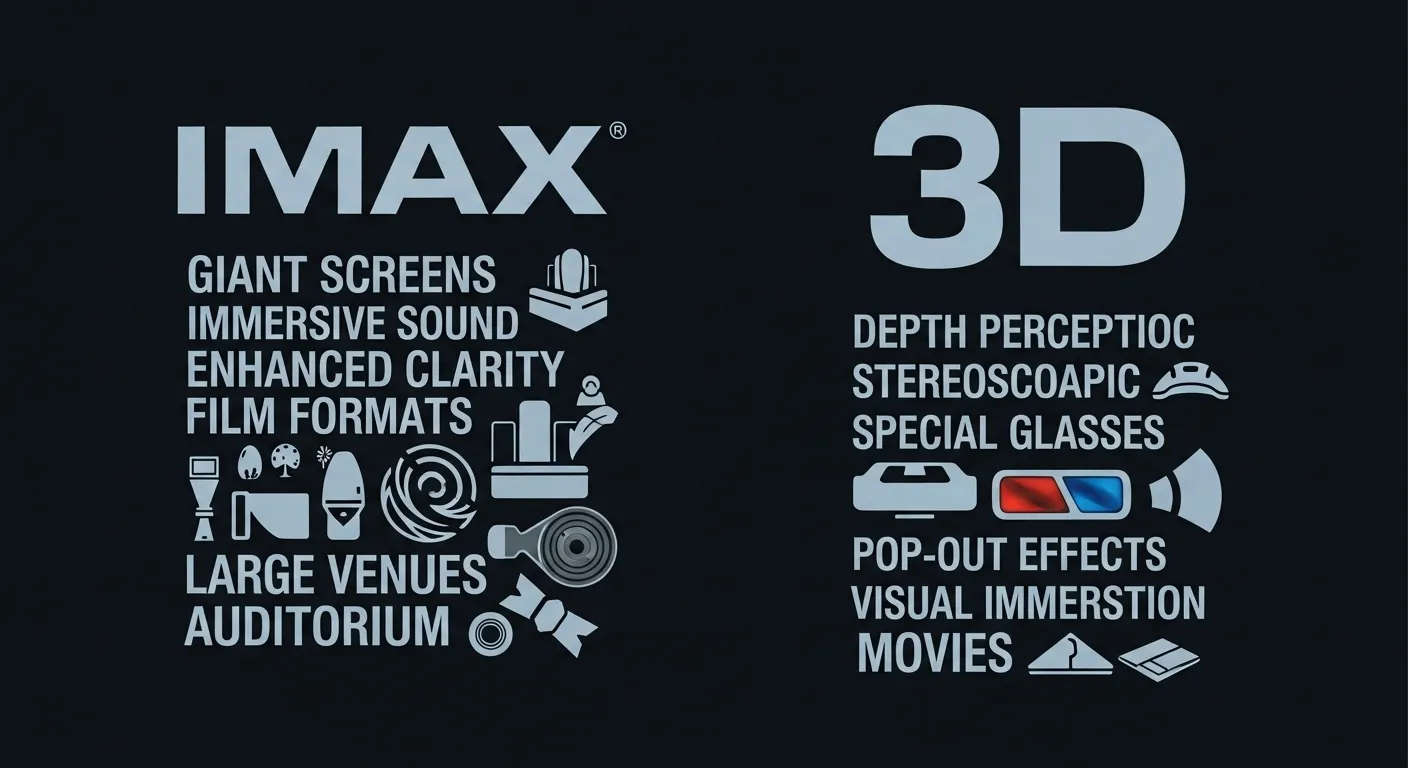
While IMAX focuses on size, clarity, and immersive sound, 3D adds depth to images.
Understanding the difference between IMAX and 3D can help you choose the right format for your movie night.
In fact, knowing the difference between IMAX and 3D can transform how you enjoy films.
Key Difference Between the Both
- IMAX = Bigger screen + higher resolution + powerful sound
- 3D = Depth illusion + objects appear closer or farther
Why Is Their Difference Necessary to Know?
Understanding the difference matters for both learners and experts:
- For students: It builds knowledge about visual technology.
- For filmmakers: It helps choose the right format for storytelling.
- For audiences: It improves movie experience decisions.
- For society: It drives innovation in entertainment technology.
Knowing this difference ensures smarter choices and deeper appreciation of cinema.
Pronunciation
- IMAX
- US: /ˈaɪ.mæks/
- UK: /ˈaɪ.mæks/
- 3D (Three-D)
- US: /ˌθriː ˈdiː/
- UK: /ˌθriː ˈdiː/
Linking Hook
Now that you understand the basics, let’s explore the difference between IMAX and 3D in detail so you can clearly decide which one suits your needs.
Difference Between IMAX and 3D
1. Screen Size
- IMAX uses massive screens that fill your vision.
- 3D can be shown on normal-sized screens.
Examples:
- Watching a space movie in IMAX feels like you are inside space.
- Watching the same movie in 3D gives depth but not scale.
2. Image Quality
- IMAX offers ultra-high resolution and clarity.
- 3D focuses more on depth than sharpness.
Examples:
- IMAX shows fine details like stars clearly.
- 3D shows objects popping out but may look slightly darker.
3. Glasses Requirement
- IMAX (standard) does not require glasses.
- 3D always requires special glasses.
Examples:
- You can watch IMAX comfortably without accessories.
- 3D glasses may feel heavy after long use.
4. Viewing Experience
- IMAX is immersive due to size and sound.
- 3D is immersive due to depth illusion.
Examples:
- IMAX makes you feel surrounded by the scene.
- 3D makes objects appear closer to you.
5. Technology Used
- IMAX uses advanced projection and sound systems.
- 3D uses stereoscopic imaging.
Examples:
- IMAX projectors deliver brighter visuals.
- 3D uses two images to create depth.
6. Brightness
- IMAX screens are brighter.
- 3D screens may appear dim due to glasses.
Examples:
- IMAX shows vibrant colors in daylight scenes.
- 3D movies sometimes look darker.
7. Cost
- IMAX tickets are usually more expensive.
- 3D tickets are slightly cheaper.
Examples:
- IMAX blockbuster tickets cost more.
- 3D movies are budget-friendly.
8. Sound Quality
- IMAX offers superior surround sound.
- 3D does not focus much on sound.
Examples:
- IMAX explosions feel real.
- 3D focuses more on visuals than sound.
9. Content Suitability
- IMAX suits action and nature films.
- 3D suits animated and fantasy movies.
Examples:
- IMAX works great for documentaries.
- 3D works well for cartoons.
10. Comfort Level
- IMAX is comfortable for long viewing.
- 3D may cause eye strain.
Examples:
- IMAX is easier on the eyes.
- 3D may cause headaches for some viewers.
Nature and Behaviour
- IMAX: Focuses on realism, clarity, and scale. It behaves like an enhancement of reality.
- 3D: Focuses on illusion and depth. It behaves like a creative visual trick.
Why People Are Confused
- Both are premium cinema formats.
- Both improve viewing experience.
- Marketing often mixes the terms.
- Some movies use both together.
Table: Difference and Similarity
| Feature | IMAX | 3D | Similarity |
| Screen Size | Very large | Standard | Both enhance viewing |
| Glasses | Not always needed | Always required | Used in theaters |
| Focus | Clarity & sound | Depth | Improve experience |
| Cost | Expensive | Moderate | Premium formats |
| Comfort | High | Medium | Entertainment purpose |
Which Is Better in What Situation?
IMAX is better when you want a powerful and realistic experience. It is ideal for action, space, and nature films. The large screen and strong sound make everything feel real and exciting.
3D is better when you want fun and creative visuals. It works well for animated movies and fantasy stories where depth adds magic. It is perfect for kids and casual viewers.
Metaphors and Similes
- IMAX is like standing inside the movie.
- 3D is like watching pictures come alive.
Connotative Meaning
IMAX
- Positive: Premium, immersive
- Neutral: Large-scale cinema
- Negative: Expensive
Example:
Watching in IMAX felt like a luxury experience.
3D
- Positive: Fun, engaging
- Neutral: Visual effect
- Negative: Straining
Example:
The 3D effects were exciting but tiring.
Idioms or Proverbs
(No direct idioms exist, but related expressions can be used)
- Seeing is believing
- Example: 3D proves that seeing is believing.
- Bigger is better
- Example: IMAX follows the idea that bigger is better.
Works in Literature
(Not directly about IMAX/3D but related to visual storytelling)
- The Cinema Effect – Sean Cubitt (2004) – Film Studies
- Film Art – David Bordwell (1979) – Academic
Movies Using These Technologies
- Avatar (2009, USA) – Famous for 3D
- Interstellar (2014, USA) – Shot in IMAX
- Avengers: Endgame (2019, USA) – IMAX format
- Gravity (2013, USA/UK) – 3D experience
FAQs
1. What is the main difference between IMAX and 3D?
IMAX focuses on screen size and sound, while 3D focuses on depth.
2. Can a movie be both IMAX and 3D?
Yes, some movies combine both technologies.
3. Which is more expensive?
IMAX is usually more expensive.
4. Is 3D harmful to eyes?
It may cause strain for some people.
5. Which is better for action movies?
IMAX is better for action films.
Usefulness in Surroundings
- IMAX helps in education, documentaries, and scientific films.
- 3D helps in gaming, animation, and design industries.
Both improve how we experience visuals in daily life.
Final Words
IMAX delivers realism and power, while 3D offers creativity and depth. Both have unique strengths.
Conclusion
The difference between IMAX and 3D is clear when you understand their purpose.
IMAX gives you a larger-than-life experience with sharp visuals and powerful sound. On the other hand, 3D adds depth and makes objects feel closer.
Both technologies enhance cinema in their own ways.
Choosing between them depends on your preference and the type of movie. If you want realism, go for IMAX.
If you want fun visuals, choose 3D. Knowing the difference between IMAX and 3D helps you make better decisions and enjoy movies more fully.