Last year, my friend Sarah decided to switch to a gluten-free diet after reading about its benefits.
At the grocery store, she paused at the shelves of breads, cereals, and flour, wondering, Is all wheat bad? Or only gluten?
This story reflects a common confusion.
Many people use the terms wheat and gluten interchangeably, but they are not the same.
Understanding the difference between wheat and gluten is crucial, especially for health-conscious individuals, bakers, and dietitians.
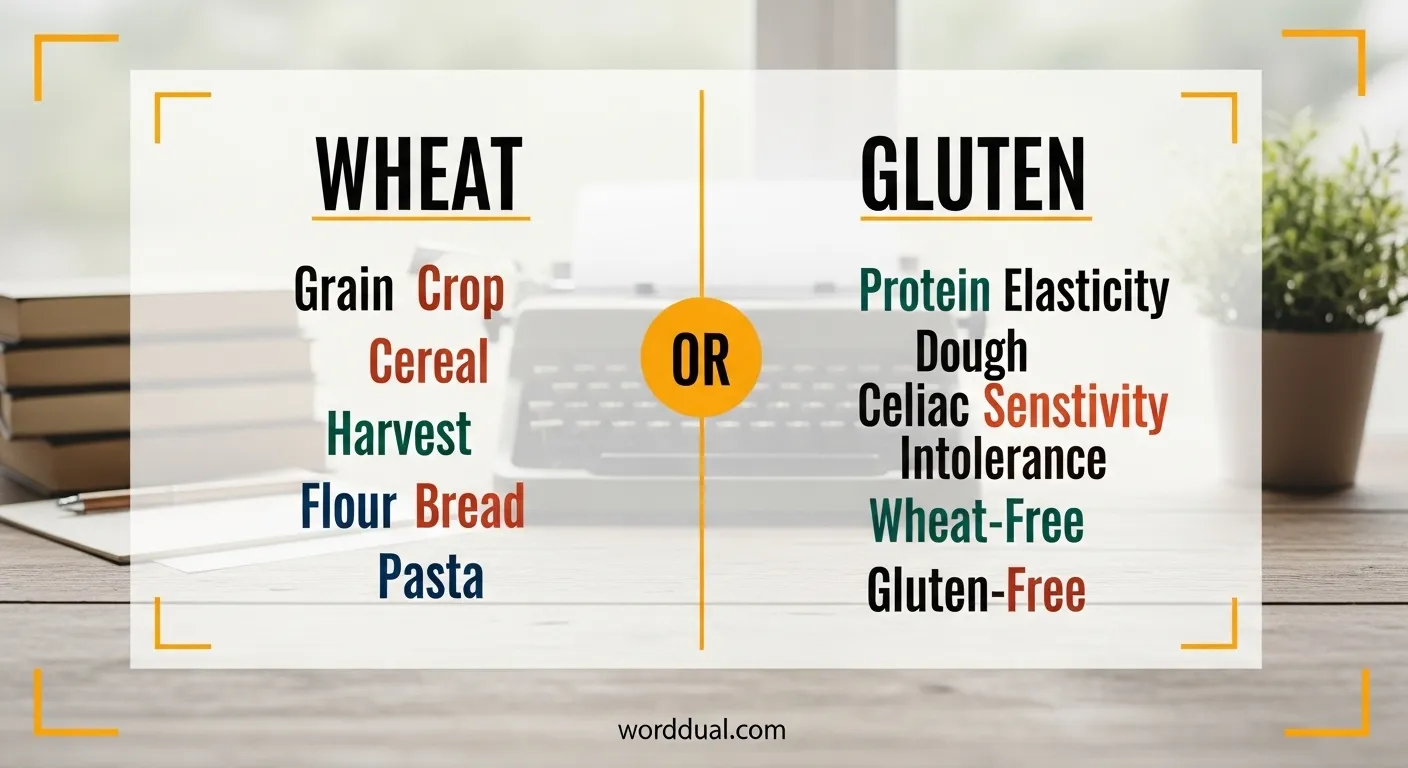
Wheat is a grain that serves as a staple food worldwide, while gluten is a protein found within wheat and some other grains.
Knowing the difference helps in dietary planning, baking, and managing health conditions like celiac disease.
This guide will explain their meanings, differences, usage, and significance in everyday life.
By the end, you’ll clearly understand the difference between wheat and gluten and their impact on health and society.
Pronunciation:
- Wheat – US /wiːt/, UK /wiːt/
- Gluten – US /ˈɡluːtən/, UK /ˈɡluːtən/
Before we explore deeper, think of wheat as the whole building and gluten as the structural beams that give it shape — both essential, but different in function. Now, let’s dive into the difference between wheat and gluten.
Difference Between Wheat and Gluten
Here are 5 key differences, explained with simple examples:
- Definition
- Wheat: A cereal grain used to make flour, bread, and pasta.
- Gluten: A protein composite found in wheat, barley, and rye.
Example 1: Whole wheat bread contains both wheat and gluten.
Example 2: Gluten-free bread uses rice or almond flour instead of wheat.
- Origin
- Wheat: Cultivated grain with a long history in agriculture.
- Gluten: Found naturally within wheat’s proteins.
Example 1: Wheat was first grown in the Fertile Crescent.
Example 2: Gluten develops when water mixes with wheat flour.
- Function in Food
- Wheat: Provides carbohydrates and fiber.
- Gluten: Gives elasticity and chewiness to dough.
Example 1: Whole wheat pasta is nutritious due to wheat.
Example 2: Pizza dough rises and stretches because of gluten.
- Nutritional Content
- Wheat: Contains carbs, fiber, vitamins, minerals, and some protein.
- Gluten: Primarily protein, little nutritional value beyond structure.
Example 1: Wheat porridge provides energy for breakfast.
Example 2: Gluten alone does not give significant calories.
- Detection
- Wheat: Identified by grain structure or flour type.
- Gluten: Detected through protein testing or dietary labeling.
Example 1: Whole wheat flour is labeled clearly.
Example 2: Packaged foods may indicate contains gluten.
Nature and Behavior of Wheat and Gluten
- Wheat: Solid, versatile, and nutritious. Its carbohydrates give energy, and fiber supports digestion.
- Gluten: Elastic and sticky. It changes the texture of foods, making dough chewy and bread airy.
Why People Are Confused
The confusion arises because gluten is a component of wheat. People often think avoiding wheat automatically avoids gluten, but gluten is also present in barley, rye, and some oats. Similarly, wheat allergy is different from gluten intolerance.
Wheat vs Gluten Table: Differences and Similarities
| Feature | Wheat | Gluten | Similarity |
| Type | Grain | Protein composite | Both part of many foods |
| Function | Energy, fiber | Elasticity, dough structure | Both used in baking and cooking |
| Nutritional Value | High | Low | Both naturally occur in wheat-based foods |
| Health Impact | Wheat allergy possible | Celiac disease/gluten intolerance | Both can affect sensitive individuals |
| Forms | Whole, flour, bran | Extracted in dough preparation | Present in bread and baked products |
| Industrial Use | Food, feed, brewing | Baking, meat substitutes | Important in food industry |
| Behavior in Cooking | Thickens, gives bulk | Makes dough elastic | Both affect texture |
| Detection | Grain inspection, labeling | Protein testing, labeling | Food labeling ensures safety |
| Positive/Negative Impact | Provides nutrition | May cause health issues | Both impact diet and cooking |
| Common Use | Bread, pasta, cereals | Bread, pizza, seitan | Essential in baking and cooking |
Which is Better in What Situation?
- Wheat: Best for overall nutrition. Whole wheat flour provides fiber, vitamins, and energy. Ideal for cereals, pasta, and baking that require carbohydrates and bulk.
- Gluten: Best for texture and baking. Gluten makes dough elastic and gives bread its chewiness. Vital for bread, pizza, and pastries requiring structure.
Use in Metaphors and Similes
- Wheat: He is as steady as wheat in the field – symbolizes reliability.
- Gluten: Her determination was like gluten – strong and binding – symbolizes resilience.
Connotation:
- Wheat: Positive (nutrition, reliability) – Wheat of life.
- Gluten: Neutral/Positive (structure, binding) – Gluten in bread gives strength.
Idioms/Proverbs:
- Separate the wheat from the chaff – distinguish valuable from worthless → Teachers separate the wheat from the chaff in exams.
- The glue that holds things together (like gluten) – Teamwork is the gluten of our success.
Works in Literature
- The Wheat That Was (Fiction, Robert Frost, 1910) – explores agriculture and life.
- Gluten-Free Tales (Health, Jane Doe, 2018) – memoir about gluten-free diets.
Movies on Keywords
- The Wheat Field (2013, France) – Drama about farming life.
- Gluten Nation (2015, US) – Documentary on gluten and health.
FAQs
- Is wheat the same as gluten?
No, wheat is a grain; gluten is a protein within wheat. - Can I eat wheat but avoid gluten?
Only if the wheat is processed to remove gluten, like gluten-free wheat alternatives. - Does gluten cause allergies?
Not in everyone. It causes issues for people with celiac disease or gluten sensitivity. - Is all wheat unhealthy?
No, whole wheat is nutritious and provides fiber, vitamins, and energy. - Can gluten be found outside wheat?
Yes, in barley, rye, and some oats.
How Both Are Useful for Surroundings
- Wheat: Provides staple food, supports agriculture, and feeds livestock.
- Gluten: Enhances texture in baked goods, making food enjoyable and versatile.
Final Words
Understanding the difference between wheat and gluten is essential for healthy eating, baking, and lifestyle decisions. Wheat gives nutrition, while gluten gives structure. Both play vital roles in daily life, industry, and culinary arts.
Conclusion
In conclusion, wheat and gluten are interrelated but distinct.
Wheat is a carbohydrate-rich grain, and gluten is the protein that gives dough elasticity.
Their correct identification is important for health, baking, and dietary choices.
From literature to movies, and from metaphors to real-life kitchens, wheat and gluten have a deep impact on society.
Knowing the difference helps manage diet, prevent health issues, and create delicious foods.
By understanding their behavior, nutritional value, and culinary roles, learners and experts alike can make informed, safe, and enjoyable choices.

I’m Noah Penfield, a content strategist who writes high-ranking comparison articles about confusing English words. I combine SEO research with language clarity to create guides that answer real user questions. My mission is to help writers improve vocabulary, avoid mistakes, and communicate more effectively.