A few years ago, a young student watched how rainbows formed after rain. Curious, she asked her teacher why colors appeared in the sky.
That question led her into science. Later, she used a smartphone app to simulate light and colors this was technology in action.
This simple story shows the difference between science and technology in everyday life.
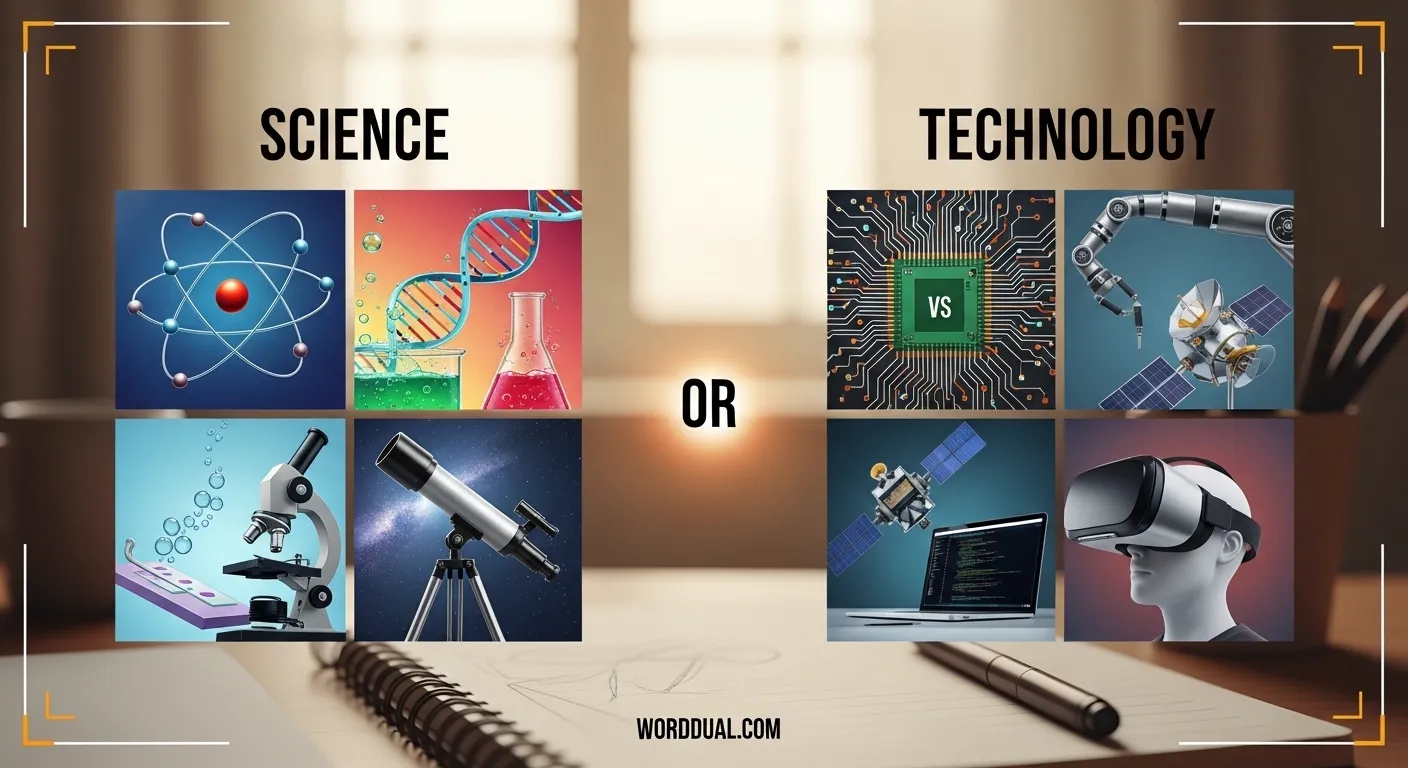
The difference between science and technology lies in how we understand and use the world.
Science focuses on discovering truths about nature, while technology applies that knowledge to solve real problems.
Understanding the difference between science and technology helps us see how ideas turn into tools.
It also explains why both fields shape our daily lives in different ways.
In fact, the difference between science and technology is not just academic it affects education, careers, and innovation.
From medicine to machines, both work together but have unique roles.
Key Difference Between Science and Technology
- Science is about understanding the natural world.
- Technology is about using that understanding to create tools and solutions.
Why Is Their Difference Necessary to Know for Learners and Experts?
Knowing the difference between science and technology is important because:
- It helps learners choose the right career path.
- Experts can focus on research (science) or application (technology).
- Society benefits from both innovation and discovery.
- It prevents confusion between theory and practice.
Science builds knowledge, while technology builds convenience. Both are essential for progress.
Pronunciation of Both
- Science
- US: /ˈsaɪəns/
- UK: /ˈsaɪəns/
- Technology
- US: /tɛkˈnɑːlədʒi/
- UK: /tɛkˈnɒlədʒi/
Linking Hook
Now that you understand the basics, let’s explore the difference between science and technology in detail with clear points and real-life examples.
Difference Between Science and Technology
1. Purpose
- Science aims to discover facts.
- Technology aims to solve problems.
Examples:
- Science: Studying gravity.
- Technology: Building elevators.
- Science: Researching bacteria.
- Technology: Creating antibiotics.
2. Nature
- Science is theoretical.
- Technology is practical.
Examples:
- Science: Laws of motion.
- Technology: Designing cars.
- Science: Studying electricity.
- Technology: Making electric bulbs.
3. Focus
- Science focuses on knowledge.
- Technology focuses on application.
Examples:
- Science: Understanding the human body.
- Technology: Developing medical devices.
- Science: Learning about stars.
- Technology: Building telescopes.
4. Outcome
- Science produces explanations.
- Technology produces products.
Examples:
- Science: Theory of evolution.
- Technology: DNA testing kits.
- Science: Climate studies.
- Technology: Weather apps.
5. Method
- Science uses experiments.
- Technology uses design and innovation.
Examples:
- Science: Lab experiments.
- Technology: Engineering prototypes.
- Science: Data analysis.
- Technology: Software development.
6. Dependency
- Technology depends on science.
- Science does not always depend on technology.
Examples:
- Science: Discovering atoms.
- Technology: Creating nuclear energy.
- Science: Studying light.
- Technology: Laser devices.
7. Goal
- Science seeks truth.
- Technology seeks efficiency.
Examples:
- Science: Finding how plants grow.
- Technology: Developing fertilizers.
- Science: Understanding disease.
- Technology: Creating vaccines.
8. Evolution
- Science evolves through discoveries.
- Technology evolves through innovation.
Examples:
- Science: New theories in physics.
- Technology: Faster computers.
- Science: Genetic research.
- Technology: Gene editing tools.
9. Measurement of Success
- Science is judged by accuracy.
- Technology is judged by usefulness.
Examples:
- Science: Correct predictions.
- Technology: User satisfaction.
- Science: Valid experiments.
- Technology: Market demand.
10. Field of Work
- Science is academic.
- Technology is industrial.
Examples:
- Science: University research.
- Technology: Manufacturing industries.
- Science: Lab work.
- Technology: Engineering firms.
Nature and Behaviour of Both
Science
- Curious and exploratory.
- Focuses on asking why.
- Constantly evolving with new findings.
Technology
- Creative and solution-oriented.
- Focuses on asking how.
- Changes rapidly with innovation.
Why People Are Confused About Their Use
- Both are closely connected.
- Technology often uses scientific knowledge.
- Schools sometimes mix both subjects.
- Everyday language uses them interchangeably.
This overlap makes the difference between science and technology harder to notice.
Table: Difference and Similarity
| Aspect | Science | Technology | Similarity |
| Purpose | Knowledge | Application | Both solve problems |
| Nature | Theoretical | Practical | Both require skills |
| Output | Theories | Tools | Both create value |
| Method | Experiments | Design | Both involve research |
| Goal | Truth | Efficiency | Both improve life |
Which Is Better in What Situation?
Science is better when the goal is to understand the world. For example, studying diseases helps us know their causes. Without science, we cannot build strong knowledge. It lays the foundation for all progress.
Technology is better when the goal is to solve real-world problems. For example, creating a mobile app makes communication easier. Technology turns ideas into action. It improves comfort and saves time in daily life.
Use in Metaphors and Similes
- Her mind works like science logical and precise.
- His ideas spread like technology in the modern world.
Science often symbolizes logic, while technology symbolizes progress.
Connotative Meaning
Science
- Positive: Knowledge, truth
- Neutral: Study, research
- Negative: Complex or difficult
Example:
Science can be hard, but it explains everything.
Technology
- Positive: Innovation, convenience
- Neutral: Tools, systems
- Negative: Overdependence
Example:
Too much technology can reduce human interaction.
Idioms or Proverbs
- Necessity is the mother of invention.
- Example: Technology grows when people need solutions.
- Knowledge is power.
- Example: Science gives us understanding and control.
Works in Literature
- A Brief History of Time – Science, Stephen Hawking, 1988
- The Structure of Scientific Revolutions – Science, Thomas Kuhn, 1962
- The Innovators – Technology, Walter Isaacson, 2014
- Frankenstein – Science & Technology, Mary Shelley, 1818
Movies Based on Science and Technology
- Interstellar – 2014, USA
- The Martian – 2015, USA
- Ex Machina – 2014, UK
- The Social Network – 2010, USA
FAQs
1. What is the main difference between science and technology?
Science explains the world, while technology applies that knowledge.
2. Can technology exist without science?
Mostly no, because technology uses scientific knowledge.
3. Which came first: science or technology?
Basic technology came first, but modern technology depends on science.
4. Are science and technology the same?
No, they are related but different in purpose and method.
5. Why are both important?
Science builds knowledge, and technology improves life.
How Both Are Useful for Surroundings
- Science helps us understand nature and climate.
- Technology helps us manage resources efficiently.
- Science explains pollution.
- Technology reduces pollution through solutions.
Together, they create a better and safer environment.
Final Words for Both
Science gives us the why, and technology gives us the how.
Both are powerful tools that shape the modern world.
Conclusion
The difference between science and technology is simple yet powerful.
Science is about discovering truths, while technology is about applying those truths to improve life.
Though they are different, they work closely together. Without science, technology would lack direction.
Without technology, science would remain limited in use.
Understanding the difference between science and technology helps students, professionals, and society grow smarter and more efficient.
Both fields are essential for progress, innovation, and a better future.
By valuing both, we can create a balanced world where knowledge and application go hand in hand.