A few years ago, a friend from the United States tried baking a cake using a European recipe.
The recipe used grams and liters, but his measuring cups showed ounces and cups. The result? A cake that looked more like a pancake.
This real-life mix-up clearly shows the difference between standard and metric systems and why it matters in everyday life.
The difference between standard and metric is not just about numbers it affects cooking, construction, science, and even travel.
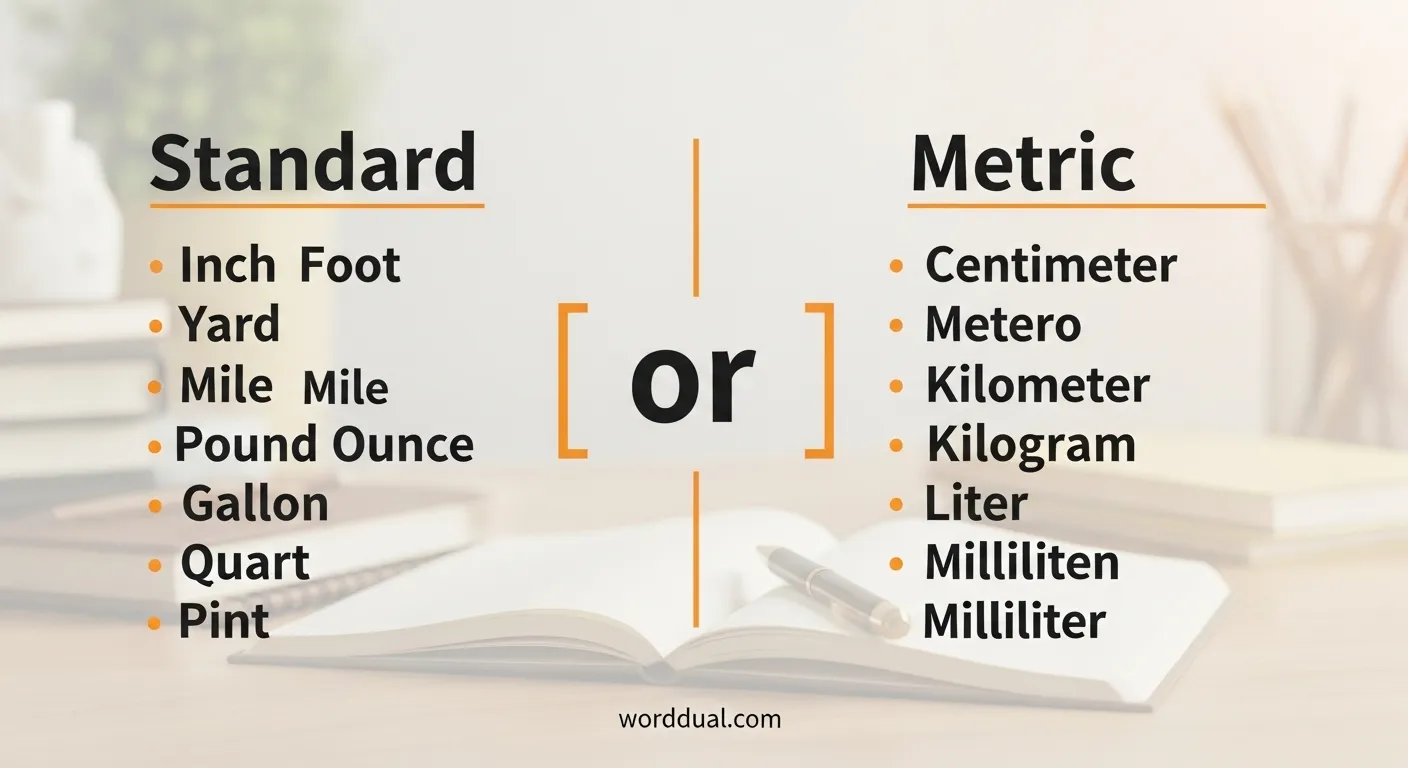
While one system uses inches, pounds, and gallons, the other uses meters, grams, and liters.
Understanding the difference between standard and metric helps avoid confusion and errors.
Whether you are a student, a professional, or just curious, knowing this difference between standard and metric can make your life easier and more accurate.
Key Difference Between the Both
- The standard system (also called Imperial) is based on traditional units like inches, feet, and pounds.
- The metric system is based on units like meters, kilograms, and liters, using powers of 10.
Why Is Their Difference Necessary to Know?
Understanding the difference between standard and metric is important because:
- It helps in global communication.
- It ensures accuracy in science and medicine.
- It avoids costly mistakes in industries.
- It improves learning and problem-solving skills.
Both learners and experts benefit because these systems are used differently around the world.
Pronunciation of Both
- Standard
- US: STAN-derd
- UK: STAN-duhd
- Metric
- US: MEH-trik
- UK: MET-rik
Now that we understand the basics, let’s explore the main difference between standard and metric in detail.
Difference Between Standard and Metric
1. Base Units
- Standard uses inches, feet, pounds.
- Metric uses meters, grams, liters.
Examples:
- Height: 5 feet vs 1.5 meters
- Weight: 150 pounds vs 68 kilograms
2. Conversion Method
- Standard conversions are irregular.
- Metric conversions are simple (multiples of 10).
Examples:
- 12 inches = 1 foot
- 100 centimeters = 1 meter
3. Ease of Use
- The standard is harder to calculate.
- Metric is easy and logical.
Examples:
- Converting miles to inches is complex
- Converting km to meters is simple
4. Global Usage
- Standard is used mainly in the US.
- Metric is used worldwide.
Examples:
- US road signs use miles
- Most countries use kilometers
5. Scientific Use
- Standard is rarely used in science.
- Metric is the universal scientific system.
Examples:
- Lab measurements in grams
- Distance in meters
6. Precision
- Standard is less precise.
- Metric allows exact measurements.
Examples:
- 1 inch vs 2.54 cm
- Milligrams for medicine
7. Learning Curve
- Standard is harder to memorize.
- Metrics are easier due to patterns.
Examples:
- 3 feet = 1 yard (must remember)
- 1000 grams = 1 kg (logical)
8. Historical Background
- The standard comes from old traditions.
- Metric is modern and scientific.
Examples:
- Foot based on human foot
- Meter based on Earth measurement
9. Usage in Daily Life
- Standard used in US daily activities.
- Metric used globally in daily life.
Examples:
- Fuel in gallons vs liters
- Food in ounces vs grams
10. Standardization
- The standard varies slightly.
- Metric is consistent worldwide.
Examples:
- Different gallon sizes historically
- Metric units remain constant
Nature and Behaviour of Both
- Standard System:
- Irregular, traditional, and less predictable.
- Based on human-scale measurements.
- Metric System:
- Logical, consistent, and universal.
- Based on scientific principles.
Why Are People Confused About Their Use?
People often confuse the difference between standard and metric because:
- They learn both systems at school.
- Media and products use mixed units.
- Travel exposes them to different systems.
Table: Difference and Similarity
| Feature | Standard System | Metric System | Similarity |
| Units | Inches, pounds | Meters, kilograms | Both measure same things |
| Conversion | Irregular | Base 10 | Require conversion skills |
| Usage | Mostly USA | Worldwide | Used in daily life |
| Precision | Less precise | Highly precise | Both aim for accuracy |
| Learning | Harder | Easier | Taught in schools |
Which Is Better in What Situation?
The standard system works well in familiar environments like the United States. People are comfortable using inches and pounds in daily tasks. It is practical for local use where tradition matters.
The metric system is better for global communication, science, and technology. It is easier to convert and more accurate. This makes it ideal for international trade, research, and education.
Metaphors and Similes
- “Switching systems is like changing languages.”
- “Metric is as smooth as counting by tens.”
- “Standard feels like an old map, useful but tricky.”
Connotative Meaning
- Standard:
- Neutral or slightly positive
- Suggests tradition and familiarity
- Example: “This is the standard way.”
- Metric:
- Positive
- Suggests precision and modernity
- Example: “Use metric for accuracy.”
Idioms or Proverbs
- “Set the standard” – to create a model
- Example: She set the standard for quality work.
- “Measure twice, cut once”
- Example: Always double-check before acting.
Works in Literature
- “Weights and Measures Act” (Legal Document, UK, 1824)
- “The Measure of All Things” by Ken Alder (Non-fiction, 2002)
Movies Related to Measurement or Systems
- “Hidden Figures” (2016, USA) – shows importance of accurate measurement
- “October Sky” (1999, USA) – highlights scientific calculations
Frequently Asked Questions
1. What is the main difference between standard and metric?
The main difference is that metric uses base 10, while standard uses irregular units.
2. Why is metric more popular?
Because it is simple, consistent, and used worldwide.
3. Is the standard still useful?
Yes, especially in countries like the US.
4. Which system is better for students?
Metrics are easier to learn and understand.
5. Can both systems be used together?
Yes, but it may cause confusion without proper conversion.
How Both Are Useful for Surroundings
- Standard helps in local industries and traditions.
- Metric supports global trade and science.
- Both systems help people measure, build, and understand the world.
Final Words for Both
- Standard represents tradition and familiarity.
- Metric represents precision and global unity.
Conclusion
The difference between standard and metric is more than just numbers; it reflects history, culture, and progress.
While the standard system connects us to tradition, the metric system offers simplicity and accuracy.
Understanding both allows us to move smoothly between local and global contexts.
Whether you are measuring ingredients, building structures, or studying science, knowing the difference between standard and metric is essential.
In a world that is becoming more connected, both systems is not just helpful it is necessary for success and clear communication.

I’m Noah Penfield, a content strategist who writes high-ranking comparison articles about confusing English words. I combine SEO research with language clarity to create guides that answer real user questions. My mission is to help writers improve vocabulary, avoid mistakes, and communicate more effectively.