A few years ago, a parent stood confused outside two schools.
One classroom had children quietly working with wooden materials, choosing their own tasks.
The other had kids singing, painting, and listening to a story told by their teacher.
That moment perfectly reflects the difference between Montessori and Waldorf education.
The difference between Montessori and Waldorf is not just about teaching styles it’s about how children grow, think, and experience the world.
Many parents hear these terms but don’t fully understand the difference between Montessori and Waldorf, which can lead to confusion when choosing the right path.
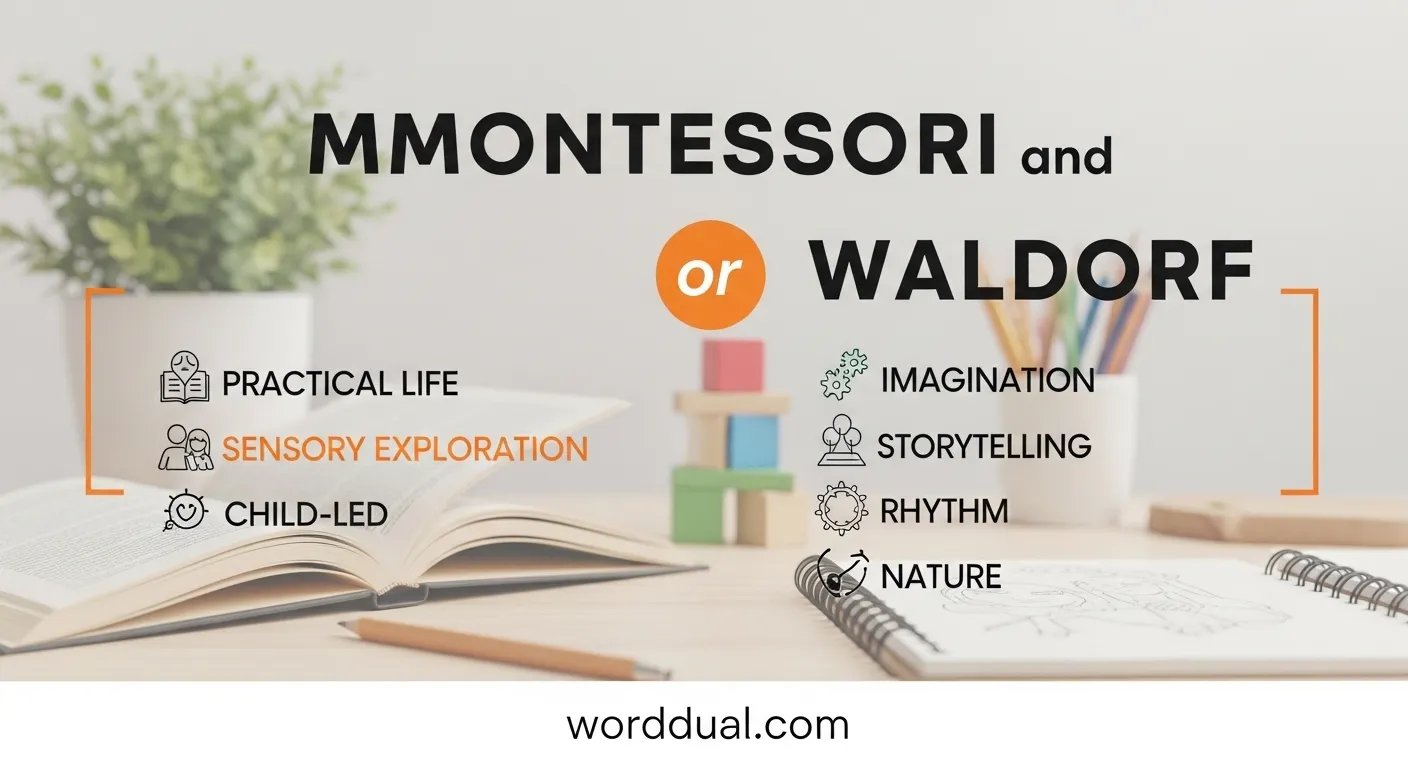
In simple terms, Montessori focuses on independence and self-directed learning, while Waldorf emphasizes imagination and creativity.
Understanding the difference between Montessori and Waldorf helps both learners and educators make better decisions.
Key Difference Between the Both
- Montessori = independence, logic, real-world skills
- Waldorf = creativity, imagination, emotional development
Why Is Their Difference Necessary to Know?
Knowing the difference between Montessori and Waldorf is important because:
- It shapes how children think and learn
- It affects social and emotional growth
- It helps parents choose suitable education
- It guides teachers in applying the right methods
Both systems play a vital role in society by developing balanced individuals with different strengths.
Pronunciation
- Montessori
- US: /ˌmɑːn.təˈsɔːr.i/
- UK: /ˌmɒn.tɪˈsɔːr.i/
- Waldorf
- US: /ˈwɔːl.dɔːrf/
- UK: /ˈwɔːl.dɔːf/
Now that we’ve built a strong foundation, let’s explore the deeper difference between Montessori and Waldorf in detail.
Difference Between Montessori and Waldorf
1. Learning Approach
- Montessori: Self-directed learning
- Example 1: A child chooses math work independently
- Example 2: Students learn at their own pace
- Waldorf: Teacher-guided learning
- Example 1: Teacher leads storytelling sessions
- Example 2: Group learning activities are common
2. Role of Teacher
- Montessori: Teacher as a guide
- Example 1: Observes rather than instructs
- Example 2: Helps only when needed
- Waldorf: Teacher as authority and mentor
- Example 1: Leads lessons actively
- Example 2: Builds emotional connection with students
3. Use of Imagination
- Montessori: Focus on reality
- Example 1: Real-life tools are used
- Example 2: Practical tasks like cleaning
- Waldorf: Focus on imagination
- Example 1: Fairy tales and fantasy
- Example 2: Creative storytelling
4. Curriculum Structure
- Montessori: Flexible curriculum
- Example 1: Child chooses subjects
- Example 2: No strict timetable
- Waldorf: Structured curriculum
- Example 1: Fixed lesson plans
- Example 2: Subjects taught in blocks
5. Learning Materials
- Montessori: Specialized learning tools
- Example 1: Counting beads
- Example 2: Sensory materials
- Waldorf: Natural and artistic materials
- Example 1: Wooden toys
- Example 2: Handmade crafts
6. Technology Use
- Montessori: Limited but practical
- Example 1: Basic digital exposure
- Example 2: Real-world tools preferred
- Waldorf: Strongly restricted
- Example 1: No screens in early years
- Example 2: Focus on hands-on play
7. Assessment Method
- Montessori: Observation-based
- Example 1: Teacher notes progress
- Example 2: No formal exams
- Waldorf: Narrative evaluation
- Example 1: Descriptive reports
- Example 2: No grades in early years
8. Classroom Environment
- Montessori: Calm and structured
- Example 1: Organized shelves
- Example 2: Quiet working spaces
- Waldorf: Warm and artistic
- Example 1: Colorful walls
- Example 2: Nature-inspired décor
9. Focus of Development
- Montessori: Intellectual independence
- Example 1: Problem-solving skills
- Example 2: Self-discipline
- Waldorf: Emotional and creative growth
- Example 1: Artistic expression
- Example 2: Social bonding
10. Age Group Mixing
- Montessori: Mixed-age classrooms
- Example 1: Older children help younger ones
- Example 2: Peer learning
- Waldorf: Same-age groups
- Example 1: Age-based classes
- Example 2: Uniform development stages
Nature and Behaviour
- Montessori
- Independent
- Logical
- Self-motivated
- Waldorf
- Creative
- Emotional
- Imaginative
Why People Are Confused About Their Use?
- Both are alternative education systems
- Both avoid traditional exams
- Both focus on holistic development
- Similar classroom environments at first glance
Table: Difference and Similarity
| Feature | Montessori | Waldorf | Similarity |
| Learning Style | Self-directed | Teacher-led | Child-centered |
| Creativity | Limited | High | Encouraged |
| Curriculum | Flexible | Structured | Holistic |
| Technology | Limited | Very limited | Minimal use |
| Assessment | Observation | Narrative | No traditional exams |
Which Is Better in What Situation?
Montessori is better when:
If a child enjoys independence and problem-solving, Montessori works well. It suits children who like working alone and learning at their own pace. It builds confidence and real-world skills.
Waldorf is better when:
If a child loves storytelling, art, and imagination, Waldorf is ideal. It supports emotional growth and creativity. It is perfect for children who enjoy group activities and artistic learning.
Use in Metaphors and Similes
- Montessori as a metaphor:
- Her learning style is Montessori independent and self-driven.
- Waldorf as a metaphor:
- His ideas flow like a Waldorf classroom full of creativity.
Connotative Meanings
- Montessori
- Positive: disciplined, independent
- Negative: too structured
- Neutral: educational method
- Waldorf
- Positive: creative, nurturing
- Negative: less academic focus
- Neutral: alternative schooling
Idioms or Proverbs
(Not directly related, but adapted usage):
- Learn by doing (Montessori style)
- Example: She believes in learning by doing like Montessori students.
- Imagination is the key (Waldorf style)
- Example: His teaching follows the idea that imagination is the key.
Works in Literature
- Montessori
- The Montessori Method – Education – Maria Montessori – 1912
- Waldorf
- Education of the Child – Philosophy – Rudolf Steiner – 1907
Movies Related to These Concepts
- Montessori-inspired
- The Beginning of Life – 2016 – Brazil
- Waldorf-inspired
- Being and Becoming – 2014 – France
Frequently Asked Questions
1. What is the main difference between Montessori and Waldorf?
Montessori focuses on independence, while Waldorf focuses on creativity.
2. Which is more academic?
Montessori is more structured academically.
3. Do both avoid exams?
Yes, both avoid traditional exams.
4. Which is better for creativity?
Waldorf is better for creativity.
5. Can a child switch between them?
Yes, but adjustment may take time.
How Both Are Useful for Surroundings
- Montessori creates independent thinkers
- Waldorf builds creative communities
- Both promote respect and cooperation
- Both support sustainable learning practices
Final Words for Both
Montessori builds thinkers.
Waldorf builds dreamers.
Both are valuable in shaping future generations.
Conclusion
Understanding the difference between Montessori and Waldorf is essential in today’s evolving education system.
Both approaches offer unique benefits and focus on holistic development, but they differ in philosophy and method.
Montessori encourages independence and logical thinking, while Waldorf nurtures creativity and emotional growth.
Choosing between them depends on the child’s personality, learning style, and future goals.
Neither is better universally they simply serve different purposes.
By understanding the difference between Montessori and Waldorf, parents and educators can make informed decisions that truly support a child’s growth and happiness.

I’m Noah Penfield, a content strategist who writes high-ranking comparison articles about confusing English words. I combine SEO research with language clarity to create guides that answer real user questions. My mission is to help writers improve vocabulary, avoid mistakes, and communicate more effectively.