A few years ago, a teacher in a diverse classroom in California asked her students to describe their backgrounds.
One student proudly said he was Mexican, while another said she was Hispanic.
Confusion filled the room weren’t they the same? This moment highlights a common misunderstanding about the difference between Mexican and Hispanic.
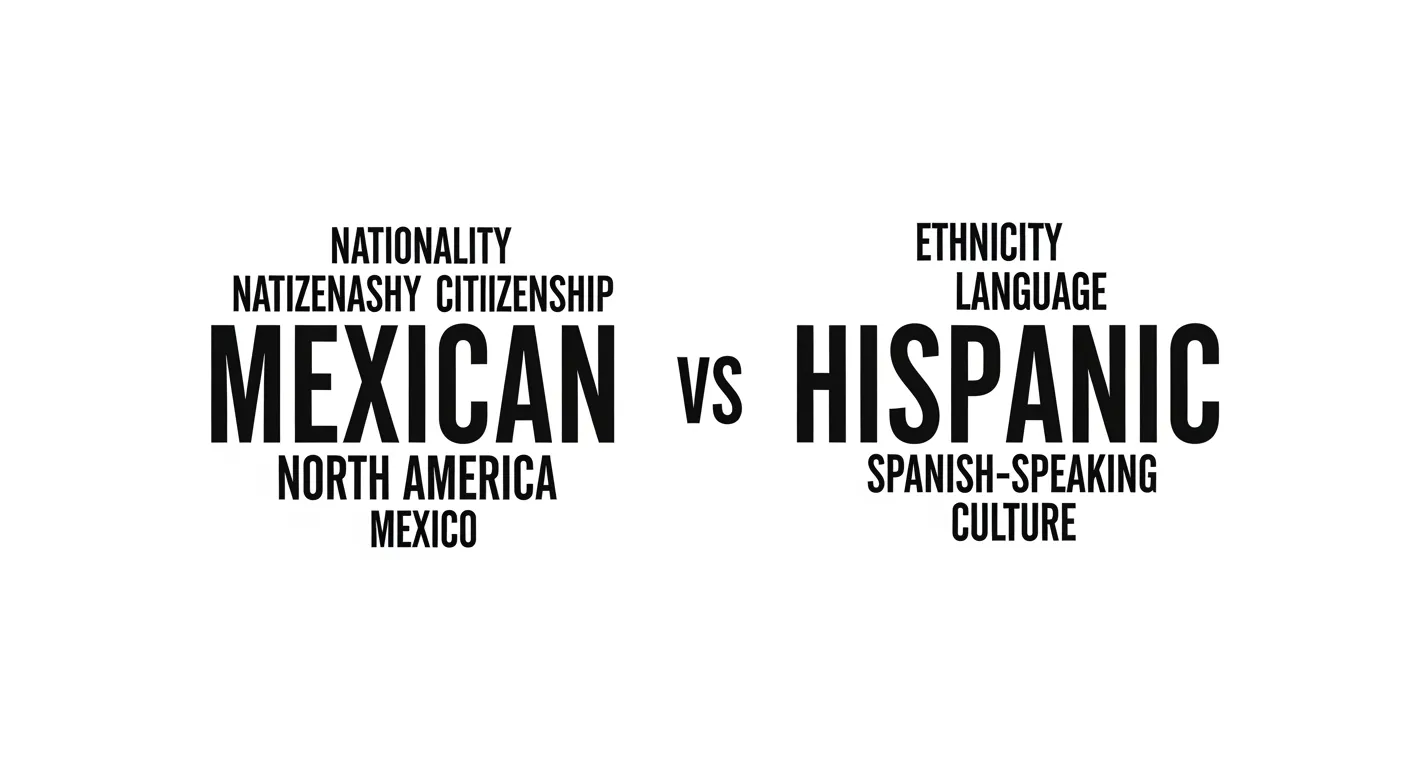
In simple terms, Mexican refers to the nationality of someone from Mexico.
Hispanic, however, is a broader cultural term used for people connected to Spanish-speaking countries.
Understanding the difference between Mexican and Hispanic is important because it shapes identity, culture, and communication.
Many people use these terms interchangeably, but doing so can lead to confusion or even offense.
By learning the difference between Mexican and Hispanic, we respect people’s identities and improve cultural awareness in our global society.
Key Difference Between the Both
- Mexican = A person from Mexico (national identity)
- Hispanic = A person from a Spanish-speaking country (cultural/linguistic identity)
Why Is Their Difference Important for Learners and Experts?
Understanding the difference between Mexican and Hispanic is essential for:
- Students and educators: Helps avoid incorrect labeling
- Professionals: Ensures respectful communication in diverse workplaces
- Researchers and experts: Provides clarity in demographic and cultural studies
- Society at large: Promotes inclusion and cultural sensitivity
Knowing these distinctions helps build stronger communities and prevents stereotypes.
Pronunciation (US & UK)
- Mexican
- US: MEK-si-kuhn
- UK: MEK-si-kuhn
- Hispanic
- US: hi-SPAN-ik
- UK: hi-SPAN-ik
Hook to Main Content
Now that you understand the basics, let’s explore the difference between Mexican and Hispanic in detail, with simple explanations, examples, and real-life context.
Difference Between Mexican and Hispanic
1. Definition
- Mexican: A person from Mexico
- Example 1: Carlos was born in Mexico, so he is Mexican.
- Example 2: Mexican culture includes traditions like Día de los Muertos.
- Hispanic: A person from a Spanish-speaking country
- Example 1: A person from Spain is Hispanic but not Mexican.
- Example 2: Someone from Argentina is Hispanic.
2. Scope
- Mexican: Specific
- Example 1: Refers only to Mexico
- Example 2: Cannot include people from other countries
- Hispanic: Broad
- Example 1: Includes people from many countries
- Example 2: Covers Latin America and Spain
3. Language Connection
- Mexican: Usually Spanish-speaking
- Example 1: Most Mexicans speak Spanish
- Example 2: Some speak indigenous languages
- Hispanic: Defined by Spanish language
- Example 1: All Hispanics have Spanish roots
- Example 2: Language is the main factor
4. Cultural Identity
- Mexican: Unique traditions
- Example 1: Mexican food like tacos
- Example 2: Mariachi music
- Hispanic: Shared language but diverse cultures
- Example 1: Spanish flamenco vs. Mexican mariachi
- Example 2: Different cuisines
5. Geography
- Mexican: From Mexico
- Example 1: Lives in Mexico City
- Example 2: Born in Guadalajara
- Hispanic: From multiple regions
- Example 1: Spain, Colombia, Peru
- Example 2: Latin American countries
6. Ethnicity vs Nationality
- Mexican: Nationality
- Example 1: Mexican passport holder
- Example 2: Legal citizenship
- Hispanic: Ethnicity/culture
- Example 1: Hispanic identity in the US
- Example 2: Cultural classification
7. Usage in the United States
- Mexican: Refers to origin
- Example 1: Mexican-American
- Example 2: Mexican heritage
- Hispanic: Used in census categories
- Example 1: Hispanic population statistics
- Example 2: Hispanic community programs
8. Inclusion
- Mexican: Limited group
- Example 1: Only Mexicans
- Example 2: Excludes Brazilians
- Hispanic: Larger group
- Example 1: Includes many countries
- Example 2: Excludes Brazil (Portuguese-speaking)
9. Identity Choice
- Mexican: Clear identity
- Example 1: Easy to identify
- Example 2: Based on birthplace
- Hispanic: Self-identification
- Example 1: Some prefer Latino instead
- Example 2: Identity can vary
10. Cultural Diversity
- Mexican: More uniform
- Example 1: Shared national traditions
- Example 2: Similar festivals
- Hispanic: Highly diverse
- Example 1: Different accents
- Example 2: Different customs
Nature and Behaviour
- Mexican
- Strong sense of national pride
- Family-oriented culture
- Rich traditions and festivals
- Hispanic
- Diverse behaviors depending on country
- Shared language creates unity
- Cultural mix of European and indigenous roots
Why People Are Confused
- Both terms relate to Spanish-speaking cultures
- Media often uses them interchangeably
- Lack of education about cultural differences
- Overlapping identities in the US
Table: Difference and Similarity
| Aspect | Mexican | Hispanic | Similarity |
| Meaning | From Mexico | Spanish-speaking origin | Cultural identity |
| Scope | Narrow | Broad | Linked to Spanish |
| Language | Mostly Spanish | Spanish | Language connection |
| Culture | Mexican culture | Many cultures | Shared roots |
| Geography | Mexico | Many countries | Global presence |
Which Is Better in What Situation?
Use Mexican when referring to someone specifically from Mexico. It is more accurate and respectful when nationality matters. For example, in cultural discussions about Mexican traditions or history, this term is best.
Use Hispanic when talking about a broader group of Spanish-speaking people. It is useful in academic, social, and demographic contexts where multiple countries are included.
Metaphors and Similes
- Her culture was like a Mexican tapestry, rich and colorful.
- The community was as diverse as the Hispanic world.
Connotative Meanings
- Mexican
- Positive: Rich culture, vibrant traditions
- Neutral: National identity
- Negative: Sometimes stereotyped
- Hispanic
- Positive: Cultural diversity
- Neutral: Broad classification
- Negative: Can feel too general
Idioms and Proverbs
(No direct idioms, but adapted usage)
- As colorful as a Mexican festival
- Unity in diversity like the Hispanic world
Works in Literature
- The House on Mango Street – Sandra Cisneros (1984, Fiction)
- Bless Me, Ultima – Rudolfo Anaya (1972, Fiction)
Movies
- Coco (2017, USA/Mexico)
- Roma (2018, Mexico)
- Selena (1997, USA)
FAQs
1. Is every Mexican Hispanic?
Yes, most Mexicans are Hispanic because they speak Spanish.
2. Is every Hispanic Mexican?
No, Hispanics include people from many countries.
3. What about Brazil?
Brazil is not Hispanic because it speaks Portuguese.
4. Is Hispanic the same as Latino?
Not exactly. Latino relates to Latin America; Hispanic relates to Spanish language.
5. Which term should I use?
Use the most specific and respectful term based on context.
How Both Are Useful for Society
- Promote cultural understanding
- Help in education and research
- Improve communication in diverse environments
- Support identity and representation
Final Words for Both
Both terms carry deep meaning. Mexican highlights national pride, while Hispanic reflects shared language and culture.
Conclusion
Understanding the difference between Mexican and Hispanic is more than just learning definitions, it is about respecting identity and culture.
While Mexican refers to nationality, Hispanic connects people through language and shared heritage.
Misusing these terms can lead to confusion, but using them correctly builds better communication and inclusivity.
In today’s global world, cultural awareness is essential.
By recognizing the difference between Mexican and Hispanic, we become more informed, respectful, and connected individuals.
This knowledge helps bridge gaps and celebrates diversity in meaningful ways.

I’m Noah Penfield, a content strategist who writes high-ranking comparison articles about confusing English words. I combine SEO research with language clarity to create guides that answer real user questions. My mission is to help writers improve vocabulary, avoid mistakes, and communicate more effectively.