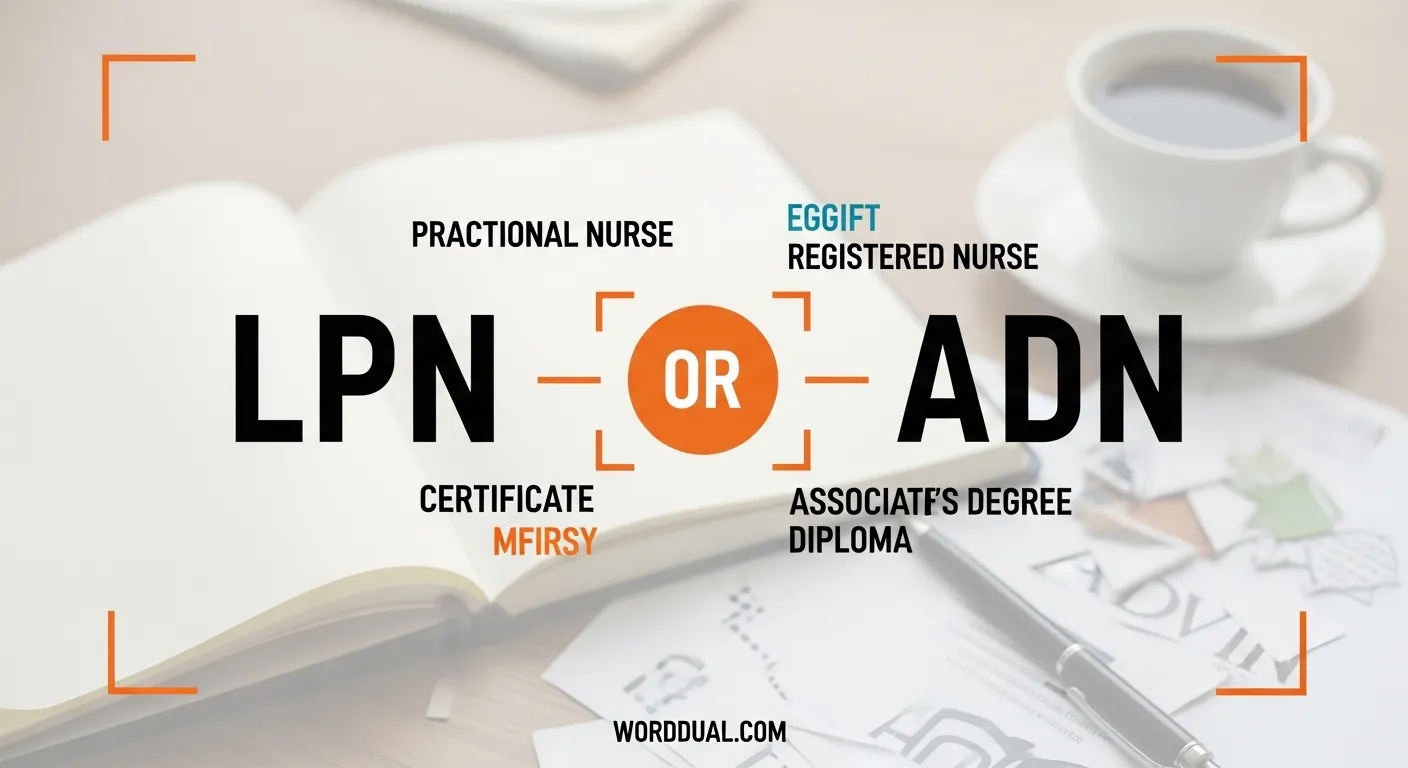
Imagine two people starting their journey in healthcare.
One chooses a quicker path to begin helping patients, while the other takes a longer route to gain deeper knowledge and more responsibilities.
Both are valuable, but their roles and training differ. This is similar to the difference between LPN and ADN.
An LPN (Licensed Practical Nurse) and an ADN (Associate Degree in Nursing) both work in patient care, but their education, duties, and career growth are not the same.
Understanding the difference between LPN and ADN helps students choose the right path and helps healthcare systems function smoothly.
In today’s world, knowing the difference between LPN and ADN is essential for anyone entering nursing.
Whether you are a beginner or planning a career shift, the difference between LPN and ADN can shape your future in healthcare.
Key Difference Between the Both
The main difference between LPN and ADN is:
- LPN: Provides basic nursing care with shorter training.
- ADN: Offers advanced nursing knowledge and leads to becoming a Registered Nurse (RN).
Why Is Their Difference Necessary to Know?
Understanding the difference between LPN and ADN is important because:
- Students can choose the right education path.
- Hospitals assign roles effectively.
- Patients receive proper care from trained professionals.
- Healthcare systems stay organized and efficient.
This knowledge supports better career planning and improves patient care quality.
Pronunciation
- LPN (Licensed Practical Nurse)
- US: /ˌɛl.piːˈɛn/
- UK: /ˌɛl.piːˈɛn/
- ADN (Associate Degree in Nursing)
- US: /ˌeɪ.diːˈɛn/
- UK: /ˌeɪ.diːˈɛn/
Linking Hook
Now that you understand the basics, let’s explore the difference between LPN and ADN in detail with clear and simple comparisons.
Difference Between LPN and ADN
1. Education Level
- LPN: Requires a diploma or certificate.
- Example 1: 1-year nursing program at a technical school.
- Example 2: Practical nursing training in a community college.
- ADN: Requires a college degree.
- Example 1: 2-year associate degree program.
- Example 2: Nursing program at a community college.
2. Duration of Study
- LPN: Shorter duration.
- Example 1: Completed in 12–18 months.
- Example 2: Fast-track programs for quick entry.
- ADN: Longer duration.
- Example 1: Takes about 2 years.
- Example 2: Includes general education courses.
3. Licensing
- LPN: Must pass NCLEX-PN exam.
- Example 1: State licensing for practical nurses.
- Example 2: Work under supervision.
- ADN: Must pass NCLEX-RN exam.
- Example 1: Become a Registered Nurse (RN).
- Example 2: Independent nursing practice.
4. Scope of Practice
- LPN: Limited responsibilities.
- Example 1: Taking vital signs.
- Example 2: Assisting patients with daily activities.
- ADN: Broader responsibilities.
- Example 1: Administering medications.
- Example 2: Creating care plans.
5. Salary
- LPN: Lower salary.
- Example 1: Entry-level pay.
- Example 2: Limited overtime roles.
- ADN: Higher salary.
- Example 1: RN-level wages.
- Example 2: Better benefits.
6. Career Growth
- LPN: Limited advancement.
- Example 1: Can bridge to RN later.
- Example 2: Fewer leadership roles.
- ADN: More opportunities.
- Example 1: Can pursue BSN.
- Example 2: Leadership positions.
7. Work Settings
- LPN: Basic care settings.
- Example 1: Nursing homes.
- Example 2: Clinics.
- ADN: Diverse settings.
- Example 1: Hospitals.
- Example 2: Emergency units.
8. Patient Interaction
- LPN: More routine care.
- Example 1: Bathing patients.
- Example 2: Feeding assistance.
- ADN: Complex care.
- Example 1: Monitoring conditions.
- Example 2: Patient education.
9. Decision-Making
- LPN: Works under supervision.
- Example 1: Follows RN instructions.
- Example 2: Limited clinical decisions.
- ADN: Makes independent decisions.
- Example 1: Evaluates patient status.
- Example 2: Adjusts care plans.
10. Job Demand
- LPN: High demand in basic care.
- Example 1: Elder care facilities.
- Example 2: Home healthcare.
- ADN: Higher demand overall.
- Example 1: Hospitals.
- Example 2: Specialized units.
Nature and Behaviour
- LPN:
- Supportive and hands-on.
- Focuses on basic patient care.
- ADN:
- Analytical and responsible.
- Focuses on overall patient management.
Why Are People Confused?
- Both work in nursing.
- Both provide patient care.
- Titles sound similar.
- Work environments often overlap.
Table: Difference and Similarity
| Feature | LPN | ADN | Similarity |
| Education | Diploma | Degree | Nursing field |
| Duration | Short | Longer | Clinical training |
| License | NCLEX-PN | NCLEX-RN | Required exams |
| Role | Basic care | Advanced care | Patient care |
| Salary | Lower | Higher | Healthcare jobs |
Which Is Better in What Situation?
The LPN path is better for those who want to start working quickly. It requires less time and money, making it ideal for beginners or those needing immediate income. It is also suitable for people who enjoy hands-on patient care without complex responsibilities.
The ADN path is better for long-term career growth. It offers higher salaries, more responsibilities, and better job opportunities. It is ideal for those who want to become Registered Nurses and advance in healthcare. This path provides stability and professional development.
Metaphors and Similes
- LPN: Like a strong support beam in a building.
- ADN: Like the architect guiding the structure.
Connotative Meaning
- LPN
- Neutral/Positive: support, care
- Example: She played an LPN role in helping the team succeed.
- ADN
- Positive: leadership, expertise
- Example: His ADN-level thinking solved the problem.
Idioms or Proverbs
- Start small, grow big (LPN path)
- Example: She began as LPN and became an RN.
- Knowledge is power (ADN path)
- Example: His ADN education gave him confidence.
Works in Literature
- Notes on Nursing – Florence Nightingale (1860, Medical Writing)
- The Nurse Educator – Various Authors (Modern Academic)
- From Silence to Voice – Bernice Buresh (2006, Healthcare Writing)
Movies Related to Nursing
- The English Patient (1996, UK/USA)
- Nurse Betty (2000, USA)
- One Flew Over the Cuckoo’s Nest (1975, USA)
FAQs
1. What is the main difference between LPN and ADN?
LPN provides basic care, while ADN leads to becoming a Registered Nurse with advanced duties.
2. Which takes longer to complete?
ADN takes longer than LPN.
3. Can an LPN become an RN?
Yes, through bridge programs.
4. Which earns more money?
ADN (RN) earns more than LPN.
5. Which is better for beginners?
LPN is better for quick entry into healthcare.
How Both Are Useful for Surroundings
- LPNs support daily patient care.
- ADNs manage complex medical needs.
- Both improve healthcare quality.
- Both reduce workload in hospitals.
Final Words
The difference between LPN and ADN reflects two important paths in nursing. Both roles are essential and valuable in healthcare systems.
Conclusion
Understanding the difference between LPN and ADN helps individuals make informed career choices and supports better healthcare delivery.
While LPNs provide essential hands-on care, ADNs take on more advanced roles and responsibilities.
Both contribute significantly to patient well-being and the medical field.
Choosing between them depends on personal goals, time, and resources.
By learning the difference between LPN and ADN, students and professionals can plan a successful and meaningful career in nursing.