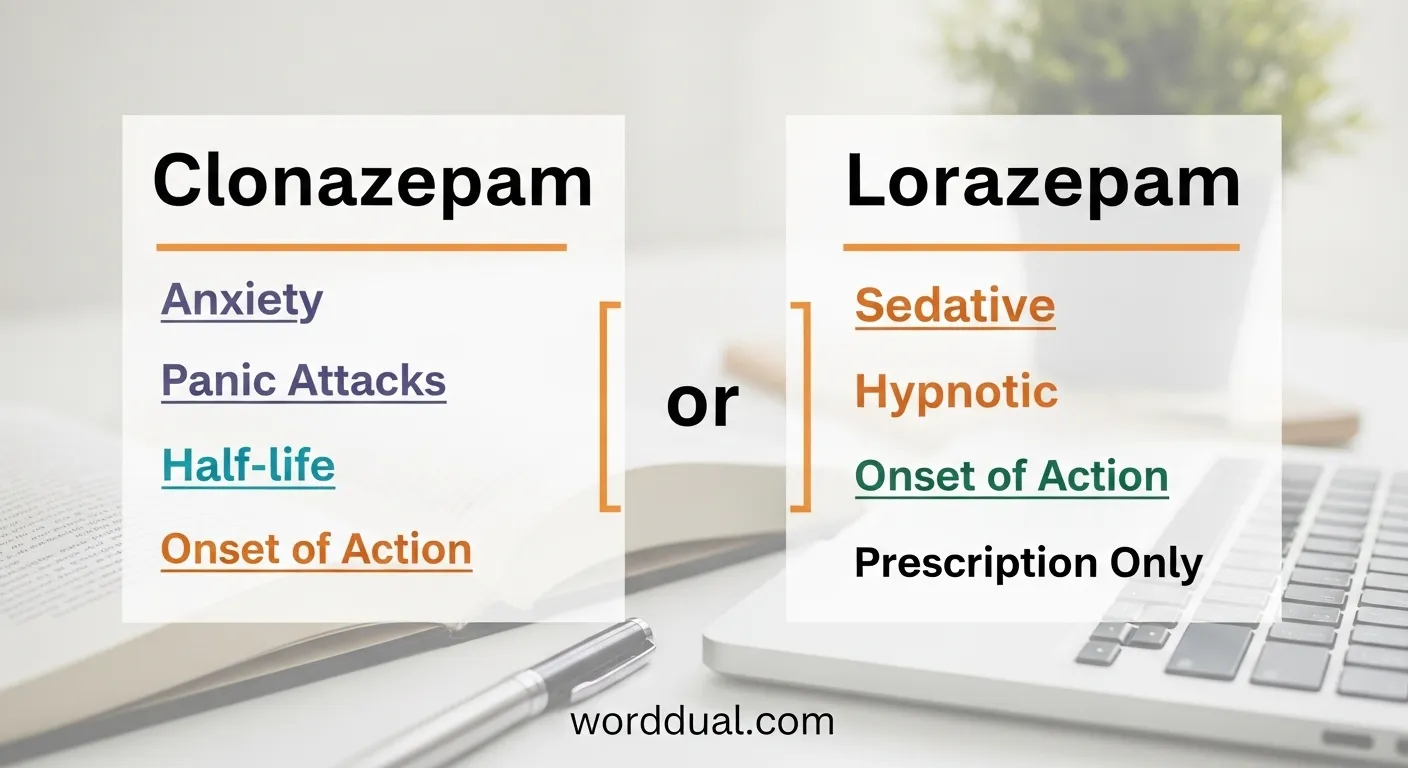
In a busy hospital ward, a young patient struggles with sudden anxiety and panic attacks.
The doctor calmly reviews two common medications Clonazepam and Lorazepam before deciding which one suits the situation best.
This real-world moment shows why understanding the difference between clonazepam and lorazepam matters.
Both drugs belong to the same family, yet they work differently in timing, strength, and purpose.
The difference between clonazepam and lorazepam often confuses learners and even professionals.
Still, knowing the difference between clonazepam and lorazepam can improve treatment outcomes and patient safety.
In daily practice, recognizing the difference between clonazepam and lorazepam helps doctors make smarter, safer decisions.
Key Difference Between the Both
- Clonazepam is long-acting and often used for ongoing conditions like seizures and panic disorder.
- Lorazepam is short-acting and works quickly, making it ideal for acute anxiety or emergencies.
Why Is Their Difference Necessary to Know?
Understanding these medications is important for both learners and experts because:
- It ensures correct treatment selection.
- It reduces the risk of side effects and dependency.
- It helps society by improving mental health care quality.
- It supports safe medication use in hospitals and homes.
In short, the difference can affect real lives.
Pronunciation (US & UK)
- Clonazepam
- US: kloh-NAZ-uh-pam
- UK: klon-AZ-uh-pam
- Lorazepam
- US: lor-AZ-uh-pam
- UK: loh-RAZ-uh-pam
Linking Hook
Now that we’ve set the foundation, let’s explore the difference between clonazepam and lorazepam in detail so you can clearly understand when and why each is used.
Difference Between Clonazepam and Lorazepam
Below are 10 key differences, explained simply with examples.
1. Duration of Action
- Clonazepam lasts longer in the body.
- Example 1: A patient takes it at night and feels calm throughout the next day.
- Example 2: It helps control seizures over extended periods.
- Lorazepam works for a shorter time.
- Example 1: Used before surgery to calm nerves.
- Example 2: Helps during sudden panic attacks.
2. Onset of Action
- Clonazepam works slower.
- Example 1: Takes time to reduce anxiety gradually.
- Example 2: Not ideal for emergencies.
- Lorazepam acts quickly.
- Example 1: Stops a panic attack within minutes.
- Example 2: Used in emergency rooms.
3. Primary Uses
- Clonazepam is used for chronic conditions.
- Example 1: Epilepsy treatment.
- Example 2: Long-term anxiety control.
- Lorazepam is used for acute situations.
- Example 1: Severe anxiety episodes.
- Example 2: Sedation before procedures.
4. Half-Life
- Clonazepam has a long half-life.
- Example 1: Fewer doses per day needed.
- Example 2: Steady drug levels in the body.
- Lorazepam has a shorter half-life.
- Example 1: Requires multiple doses daily.
- Example 2: Leaves the body faster.
5. Sedation Level
- Clonazepam causes mild sedation.
- Example 1: Patients remain functional.
- Example 2: Suitable for daily use.
- Lorazepam causes stronger sedation.
- Example 1: Helps patients sleep quickly.
- Example 2: Used in ICU settings.
6. Risk of Dependence
- Clonazepam has moderate risk.
- Example 1: Long-term users may develop tolerance.
- Example 2: Requires gradual withdrawal.
- Lorazepam has higher short-term dependence risk.
- Example 1: Frequent use leads to habit formation.
- Example 2: Sudden stopping causes withdrawal.
7. Use in Seizures
- Clonazepam is commonly used for seizure disorders.
- Example 1: Controls chronic epilepsy.
- Example 2: Prevents repeated seizures.
- Lorazepam is used for emergency seizures.
- Example 1: Stops status epilepticus.
- Example 2: Used in ambulances.
8. Availability Forms
- Clonazepam comes mainly in tablets.
- Example 1: Oral medication for home use.
- Example 2: Dissolvable tablets for convenience.
- Lorazepam comes in multiple forms.
- Example 1: Injection for hospitals.
- Example 2: Tablets for anxiety relief.
9. Metabolism
- Clonazepam is processed slowly in the liver.
- Example 1: Effects last longer.
- Example 2: Suitable for steady control.
- Lorazepam is processed faster.
- Example 1: Quick relief but shorter effect.
- Example 2: Less accumulation in the body.
Nature and Behaviour of Both
- Clonazepam
- Calm, steady, long-lasting.
- Works like a slow, gentle wave.
- Lorazepam
- Fast, powerful, short-lived.
- Acts like a quick burst of calm.
Why Are People Confused About Their Use?
- Both belong to the same drug class (benzodiazepines).
- Names sound similar.
- Both treat anxiety.
- Overlapping effects create misunderstanding.
Difference and Similarity Table
| Feature | Clonazepam | Lorazepam | Similarity |
| Duration | Long | Short | Both act on brain |
| Onset | Slow | Fast | Reduce anxiety |
| Use | Chronic | Acute | Treat panic |
| Sedation | Mild | Strong | Cause drowsiness |
| Form | Tablets | Tablets & injection | Prescription drugs |
Which Is Better in What Situation?
Clonazepam is better for long-term conditions. It works well for people who need steady anxiety or seizure control. Its long-lasting effect reduces the need for frequent doses.
Lorazepam is better for emergencies. It provides quick relief during panic attacks or severe anxiety. Doctors often use it in hospitals because of its fast action.
Metaphors and Similes (Connotative Meaning)
- Clonazepam
- Positive: Like a slow river calming the land.
- Neutral: A steady clock ticking quietly.
- Negative: A lingering shadow that stays too long.
- Lorazepam
- Positive: Like a fire extinguisher in a crisis.
- Neutral: A quick flash of lightning.
- Negative: A sudden wave that fades quickly.
Idioms or Proverbs
Though no direct idioms exist, related expressions include:
- Quick fix (Lorazepam)
- Example: Lorazepam acts like a quick fix in emergencies.
- Slow and steady wins the race (Clonazepam)
- Example: Clonazepam works slowly but effectively over time.
Works in Literature
- The Anxiety Cure (Self-help, Robert L. DuPont, 2003)
- Listening to Prozac (Psychology, Peter D. Kramer, 1993)
Movies Related to Anxiety & Sedatives
- A Beautiful Mind (2001, USA)
- Silver Linings Playbook (2012, USA)
FAQs
1. What is the main difference between clonazepam and lorazepam?
Clonazepam lasts longer, while lorazepam works faster but for a shorter time.
2. Which is stronger?
Lorazepam feels stronger because it acts quickly.
3. Can both be used for anxiety?
Yes, but in different situations chronic vs acute.
4. Are they addictive?
Yes, both can cause dependence if misused.
5. Which is safer?
Safety depends on proper use and medical guidance.
How Both Are Useful for Surroundings
- Help patients manage anxiety and stress.
- Improve mental health awareness.
- Support emergency medical care.
- Reduce suffering in society.
Final Words (Conclusion)
The difference between clonazepam and lorazepam is not just technical it has real-world importance.
While clonazepam offers long-term stability, lorazepam provides quick relief in urgent situations.
Both medications play vital roles in modern medicine, especially in mental health care.
Understanding their differences helps patients, students, and professionals make informed decisions.
When used correctly, both drugs can improve quality of life and bring calm to those who need it most.
However, misuse can lead to risks, so proper guidance is essential.